Quantitative Argumentation
Chapter 7 Exercises
Note7.A.7.A
Exercise 1 The function hillside() …
Exercise 2 The flat() function always returns the same output regardless of input. What is the rate of change of flat() with respect to its input?
Exercise 3 The function log2() is closely related to exp2(). What is the relationship?
Exercise 4 For the osc() function, what is the period (the input interval over which the function completes one full cycle and returns to its starting pattern)?
Exercise 5 Which core modeling function has an output bounded by -1 and 1?
Exercise 6 Suppose you want to model oil production using hillside(), and the data shows production reached half its maximum value around the year 1970. In the input transformation \(a(\text{year} - q_0)\), what value should \(q_0\) have?
Exercise 7 The graph shows one of the core modeling functions but with either input scaling, output scaling, or none.
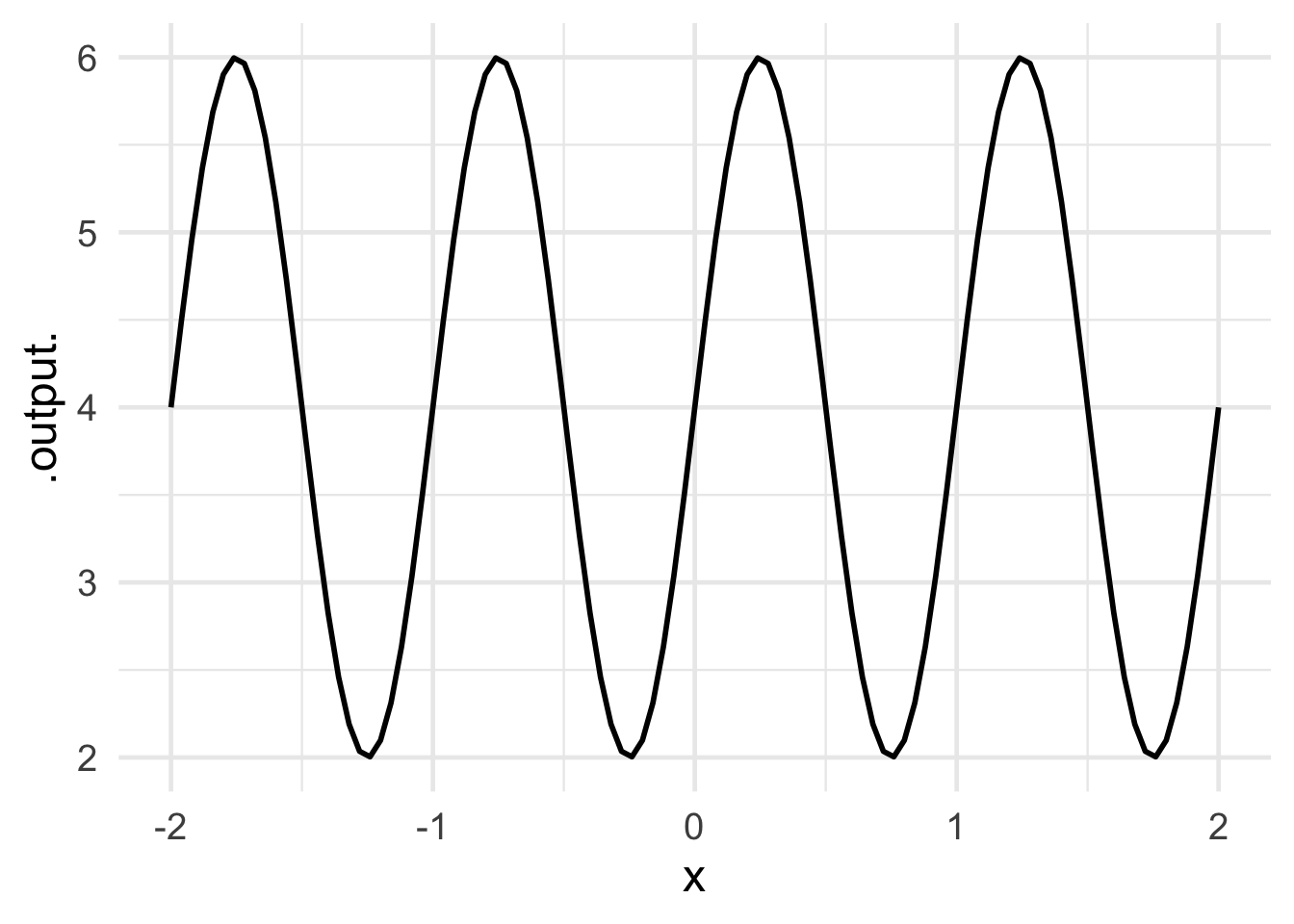
Exercise 8 The function exp2() …
Exercise 9
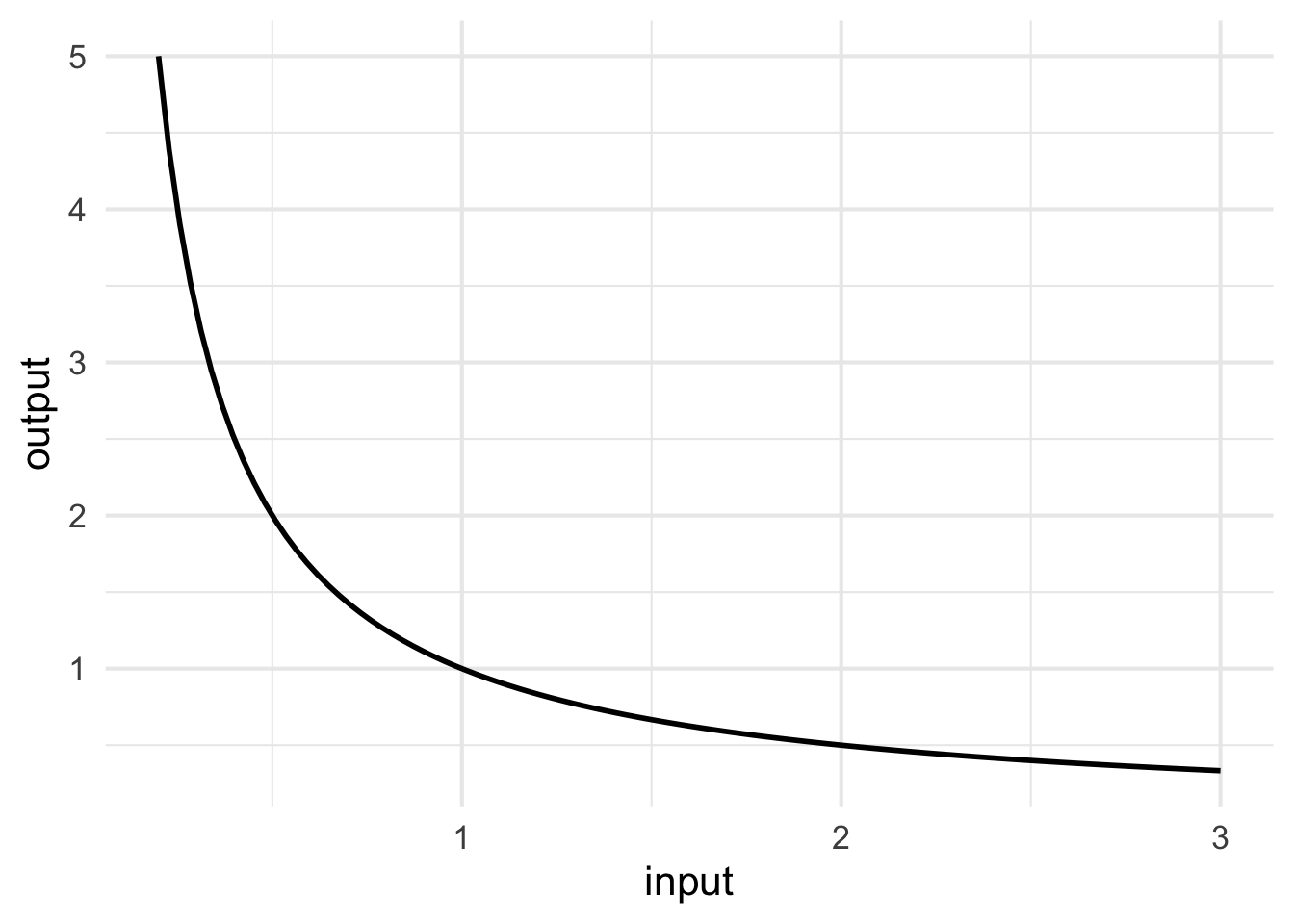
Which core modeling function does this graph show?
Exercise 10 Fix these commands so that they store the numbers properly.
#| caption: Fixing names
#| min-lines: 5
1st_place_score <- 103
first day <- Sys.Date() + 20
second-day <- Sys.Date() + 21Exercise 11
- One of these is not the name of a core modeling function. Which one?
Consider these four core modeling functions:
- flat() which says the output doesn’t depend on the input
- same() where the output increases steadily as the input increases
- hillside() where the output increases with the input for a while, but looks like
flat()for very large inputs. - hill() where the output increases with the input up to a point, but increasing the input beyond that leads to a reduction in the output.
For each of the following settings, choose which of the four functions is the better model.
- The input is the temperature setting on a heating systems thermostat, the output is the temperature of the house. (Hint: At some point, the heating system is at full blast.)
- The input is the amount of money you spend on groceries, the output is the volume of pantry space those groceries will take up.
- The input is the extent to which you push down on a car’s accelerator pedal, the output is the speed of a car on a flat road.
- The input is the amount of food you eat at a meal, the output is your sense of wellbeing after the meal.
- The input is the amount of time you spend vacuuming a rug, the output is the cleanliness of the rug.
- The input is the number of roommates you share a rental with, the output is your sense of value-for-money from your individual rent.
- The input is the amount of time you spend dreaming about having a successful athletic career, the output is the probability of your having such a career.
- The input is the amount of rainfall in your garden, the output is the harvest from the garden.
Exercise 12 Which core modeling functions produce output 1 when the input is zero?
Exercise 13
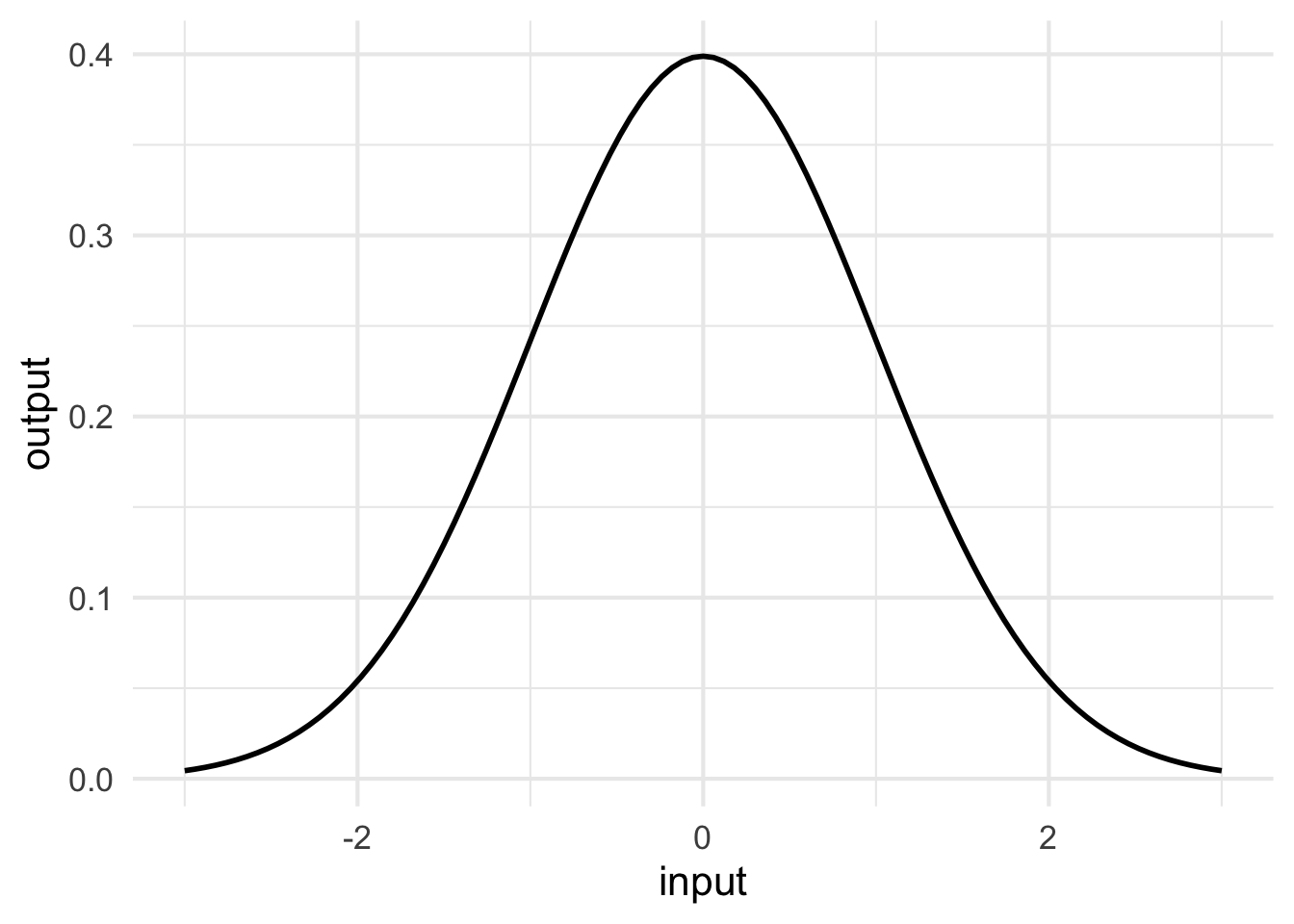
Which core modeling function does this graph show?
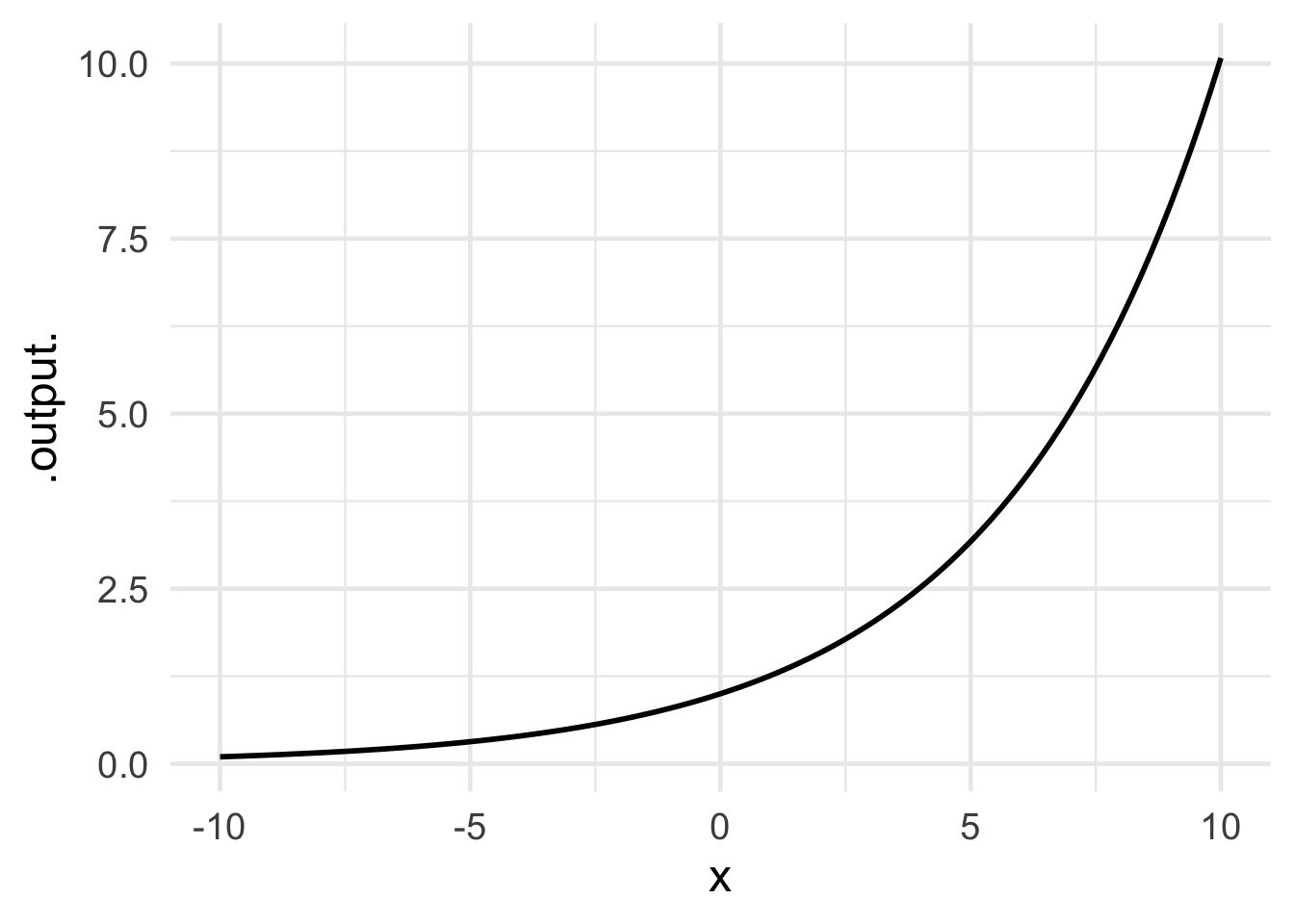
Exercise 14 The graph shows one of the core modeling functions but with either input scaling, output scaling, or none.
Exercise 15 If a quantity is measured in miles per gallon and you need to create a dimensionless input for a core modeling function using the transformation \(a(q - q_0)\), what are the units of parameter \(a\)?
Exercise 16 The function hill() …
Exercise 17 Which core modeling functions have a positive rate of change for all positive inputs?
recip()exp2()hill()hillside()same()
Exercise 18 Which core modeling function would best describe the outdoor temperature over the course of a single day (rising in the morning, falling in the evening, repeating daily)?
Exercise 19 For the log2() function:
- What is the output when the input is 8?
- What is the output when the input is 1?
- What input to
log2()gives an output of -2?
Exercise 20 Match each core modeling function to its characteristic behavior. The function osc() …
Exercise 21
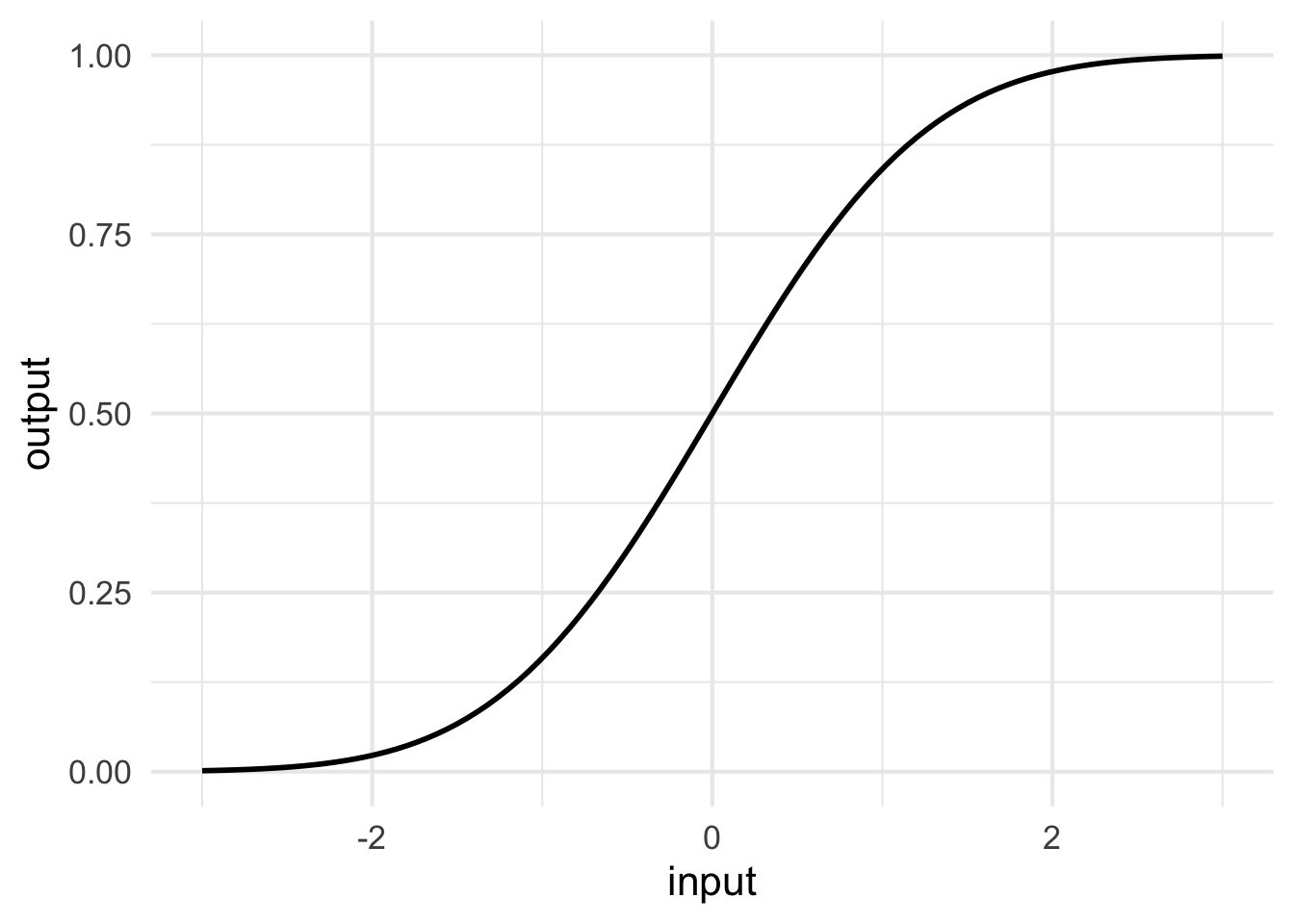
Which core modeling function does this graph show?
Exercise 22 The graph shows one of the core modeling functions but with either input scaling, output scaling, or none.
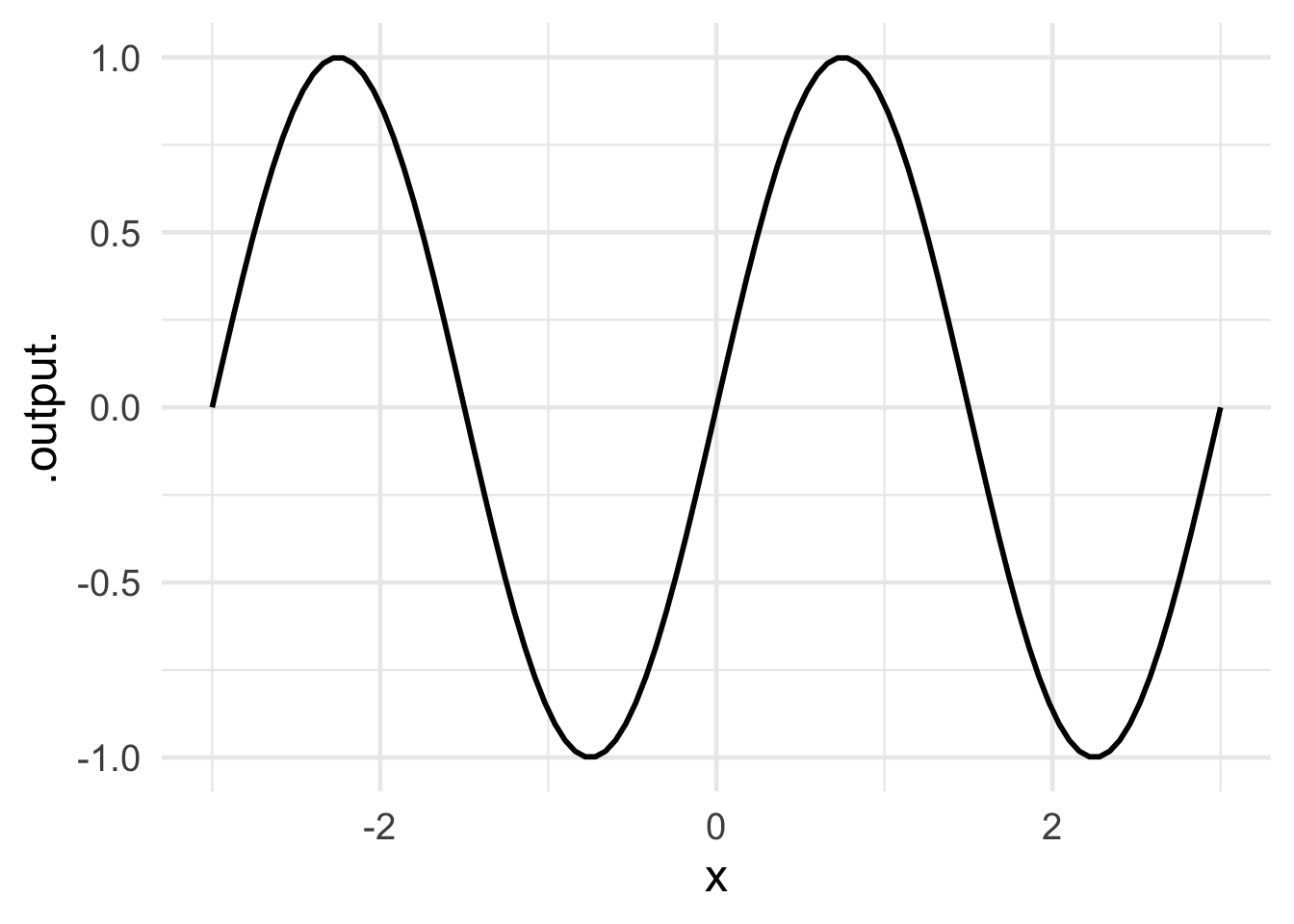
Exercise 23 Which core modeling function has an output bounded by 0 and 1?
Exercise 24 Which core modeling functions have an output that is unbounded on both the top and the bottom?
Exercise 25 Which of the following is not the name of a core modeling function?
Exercise 26
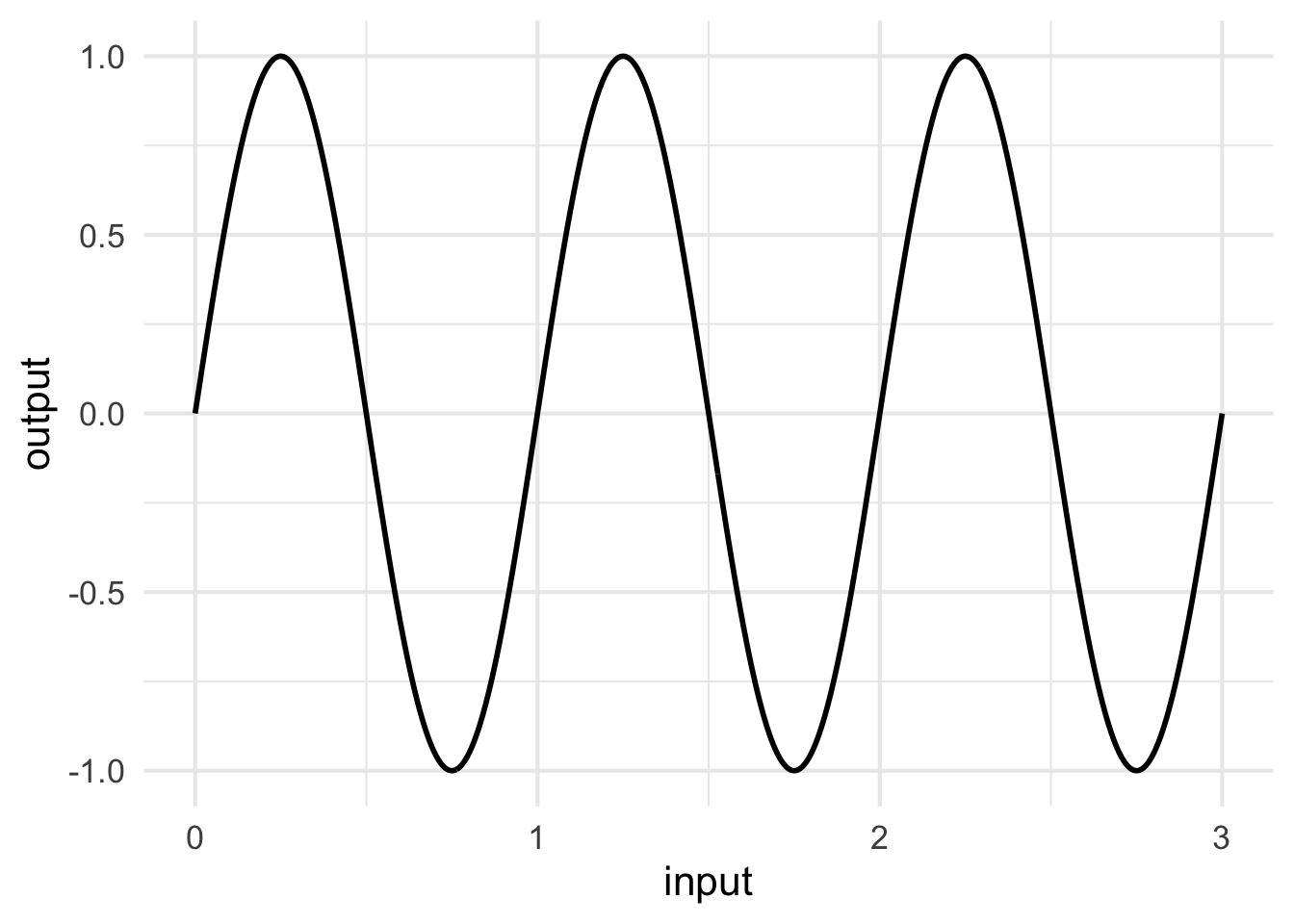
Which core modeling function does this graph show?
NoteChap 7 Key vocabulary
Only one of the following is a valid description of core modeling functions. Mark that one.
Only one of the following is a valid description of input and output scaling. Mark that one.